New guides for recovering nature across Suffolk
Suffolk’s Local Nature Recovery Strategy was published at the end of October. Created in partnership with Norfolk, the strategy sets out where and how nature can be restored across the county, defining priority species and habitats for recovery.
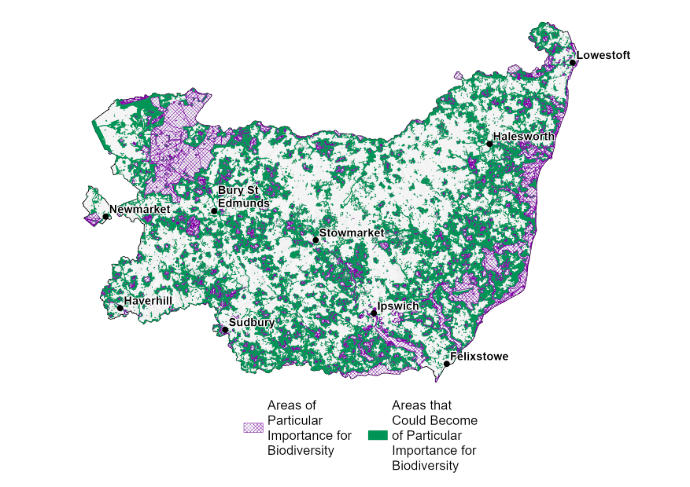
As part of the strategy a map of Suffolk has been created. This shows where Suffolk’s existing nature-rich spots are (Areas of Particular Importance for Biodiversity or APIB) and areas that could become nature-rich if recovery work takes place (Areas that Could become important for Biodiversity or ACB). The majority of areas designated as ACB surround the existing good places or are identified due to their potential for biodiversity. This is to ensure wildlife is not limited to isolated places and can instead spread throughout the county through corridors.
The LNRS is by everyone, and for everyone. Farmers, community groups and businesses all contributed to the development of the strategy, and everyone has a role to play in implementing it. Together, we can recover nature across Suffolk.
It is important to note that the LNRS is intended as a guide only. It does not force land owners to do anything with their land, any actions that have been mapped on land are suggestions only.
For more information visit Local Nature Recovery Strategy (LNRS) - Suffolk County Council Or email lnrs@suffolk.gov.uk.